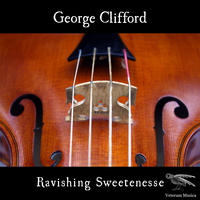
 George Clifford : Ravishing Sweetenesse.
Lutes and early guitars.
Thomas Baltzar (1630-1663) was a German violinist and composer. He was born in
Lübeck to a musical family; his father, grandfather, and great-grandfather were
all musicians.
Baltzar emigrated to England in 1655, leaving behind his newly attained position
of Ratslutenist of Lübeck. Baltzar's arrival in England was met with acclaim. On
March 4, 1656, he performed the violin at the residence of Roger L'Estrange,
where John Evelyn was in attendance. Evelyn wrote in his diary that night:
"This night I was invited by Mr. Rog: L'Estrange to heare the incomperable
Lubicer on the Violin, his variety upon a few notes and plaine ground with that
wonderfull dexterity, as was admirable, and though a very young man, yet so
perfect and skillful as there was nothing so crosse and perplext, which being by our
Artists, brought to him, which he did not at first sight, with ravishing
sweetenesse and improvements, play off, to the astonishment of our best Masters:
In Summ, he plaid on that single Instrument a full Consort, so as the rest,
flung-downe their Instruments, as acknowledging a victory."
Anthony Wood heard Baltzar play at a performance in Oxford, and described his
"very great astonishment" at the German's skill. "[I] saw him run his fingers to
the end of the finger-board of the violin, and run them back insensibly," he
wrote, "and all with alacrity and in very good tune, which [I] nor any in
England saw the like before." Also in attendance was John Wilson, a professor of
music at the University of Oxford, who (according to Wood) bowed at Baltzar's
feet after the performance.
On December 23, 1661, Baltzar entered Charles II's service as a member of the
king's private music ensemble with an annual salary of 110 pounds, a high figure for
the time.
According to Wood, Baltzar's drinking habits contributed to his death. He was
buried in the cloisters of Westminster Abbey on July 27, 1663.
Heinrich Ignaz Franz Biber von Bibern (1644-1704) is one of the most
significant composer-violinists of the late 17th century. He composed music for
a virtuoso technique including the extensive use of doublestops and arpeggios,
his works also display a wealth of formal compositional devices.
Biber was born in the small Bohemian town of Wartenberg, Biber worked at Graz
before he illegally left his Kremsier employer (Prince-Bishop Carl
Liechtenstein-Castelcorno) and settled in Salzburg. He remained there for the
rest of his life, publishing much of his music but apparently seldom, if ever,
giving concert tours.
Johann Paul von Westhoff (1656-1705) was a German Baroque composer and
violinist. As one of the most important exponents of the Dresden violin school,
he was among the highest ranked violinists of his day. He was a member of
Dresden's Hofkapelle (1674-1697) and at the Weimar court (1699-1705), and was
also active as a teacher of contemporary languages.
Westhoff's surviving music comprises seven works for violin and basso continuo
and seven for solo violin, all published during his lifetime. More works,
particularly a 1682 collection of solo violin music, are currently considered
lost.
Georg Philipp Telemann (1681-1767) was a German Baroque composer (one of the
most prolific in history!) and multi-instrumentalist. Almost completely
self-taught in music, he became a composer against his family's wishes. After
studying in Magdeburg, Zellerfeld, and Hildesheim, Telemann entered the
University of Leipzig to study law, but eventually settled on a career in music.
He held important positions in Leipzig, Sorau, Eisenach, and Frankfurt before
settling in Hamburg in 1721, where he became musical director of the city's five
main churches. While Telemann's career prospered, his personal life was always
troubled: his first wife died only a few months after their marriage, and his
second wife had extramarital affairs and accumulated a large gambling debt
before leaving Telemann.
Johann Georg Pisendel (1687-1755) was a German Baroque musician, violinist and
composer who led the Court Orchestra in Dresden for many years: then the finest
instrumental ensemble in Europe.
Pisendel was born in Cadolzburg, a small town near Nuremberg, where his father
Simon Pisendel was the cantor and organist. At the age of nine, Johan became a
choirboy at the court chapel of Ansbach. The Director of Music there was the
virtuoso singer Francesco Antonio Pistocchi and the Concert Master was the
celebrated violinist and composer Giuseppe Torelli. It is thought that Pisendel
studied the violin with Torelli. After his voice broke, Pisendel went on to play
the violin in the Court Orchestra but, in 1709, he left Dresden for Leipzig to
further his musical studies.
On the way to Leipzig, he met Johann Sebastian Bach at Weimar and, once in
Leipzig, was introduced to Georg Philipp Telemann. Pisendel was an enthusiastic
member of the student Collegium musicum founded by Telemann and they became
close friends. In 1711, after a performance at Darmstadt, Pisendel was offered a
place in the court orchestra there, but declined.
The following year he accepted a place in the Dresden Court Orchestra. He
remained with the Dresden orchestra for the rest of his life, though he
accompanied his new master, the Crown Prince, on a tour of Europe, visiting
Antonio Vivaldi (some of whose solo violin works he had already performed) in
Venice.
In 1728, Pisendel was promoted and became Concert Master of the Dresden Court
Orchestra.
Pisendel's compositions are few in number but high in quality. All of his
surviving works are instrumental. They include 10 violin concertos, 4 concertos
for orchestra, 2 sonatas for violin, a Sinfonia and a Trio.
Songs:
1. A Prelude for the Violin
2. Passacaglia for Solo Violin
3. Allemande Courante Sarabande Gigue from Partita no 1 in A Minor
4. Dolce Allegro Largo Presto from Fantasia no 7 in E Flat Major for Violin Without Bass
5. (no indication) Allegro Giga Variatione from Sonata for Violin Solo in A Minor
Listen to: the entire album.
License Lutes and early guitars by George Clifford for your project.
Play the music of George Clifford in your restaurant or store.
Release date: 04/20/2016
George Clifford lives in East Grinstead England
Tagged as: Classical, Baroque, Instrumental, Violin
Recommended albums:- Selections from JS Bach ClavierUbung III by Janine Johnson: Harpsichord and fortepiano classics
- An Evening With Bach by Voices of Music: Lilting Renaissance & Baroque vocal interpretations
- Bach and Telemann - Sonatas, Preludes and Fantasias by Voices of Music: Lilting Renaissance & Baroque vocal interpretations
- Concerto Barocco by Voices of Music: Lilting Renaissance & Baroque vocal interpretations
- Dances and Suites of Rameau and Couperin by American Baroque: Spectacular Baroque and Classical chamber music
- Conversations Galantes by Ensemble Mirable: rare and extraordinary music of the Baroque
- Classical by Magnatune Compilation: the best music from Magnatune
- Vivaldi - The Four Seasons by Lara St John: Bach violin concertos
- Clementi, Dussek, Kuhlau - Sonatinas For Piano by Marko Nouwens: classical piano sonatinas for students
- Six Sonatas for Flute and Violin - Opus 51 - Boismortier by Duo de Bois: exquisite chamber music
- Essential Scarlatti by Colin Booth: solo harpsichord music
- Weiss Undercover by Daniel Shoskes: A feast of Baroque lute
- Lautenschmaus by Daniel Shoskes: A feast of Baroque lute
- Chopin Preludes for Piano by Eric Zivian: virtuoso fortepianist plays Chopin
- JS Bach Violin Sonatas by Voices of Music: Lilting Renaissance & Baroque vocal interpretations
- The Art of the Lute Player by Jacob Heringman: renaissance lute
- Jane Pickeringes Lute Book by Jacob Heringman: renaissance lute
- Sonatas For Trumpet And Organ by Jonathan Freeman-Attwood and Iain Simcock: brilliant Baroque masterpieces in virtuoso style
- Dancing in the Isles by Musica Pacifica: Baroque and traditional music from England, Scotland and Ireland
- In a Garden So Green, Lute Music of Scotland by Voices of Music: Lilting Renaissance & Baroque vocal interpretations
Downloads:
- MP3: High quality MP3 variable-bit-rate files. Most people download these: they are audiophile files that play everywhere.
- ALAC: Perfect quality Apple Lossless format files. If you use iTunes or an iPod, get these. They're an exact audio copy of the original CD, and include the CD artwork and artist info. This is the same format as High Definition audio provided by the iTunes store.
- AAC: High quality Apple Audio Codec files. If you use iTunes or an iPod, these files sound great and include CD art and artist info. This is the standard format provided by the iTunes music store.
- WAV: Perfect quality WAV files. This format works everywhere, and is an exact audio copy of the original CD. It sounds fantastic. Album art and artist info is unfortunately not possible with this format.
- FLAC Perfect quality open source FLAC files. This is an open source audio format. It is an exact copy of the original CD, and includes CD artwork and artist info. Works great on Linux, VLC and many audio players based on open source.
- OGG: High quality open source OGG files. This is an open source audio format. It is a compressed (smaller file size) version of the original CD, and includes CD artwork and artist info. Works great on Linux, VLC and many audio players based on open source.
- 128k: Medium quality 128K MP3 files. These are medium audio quality MP3 files that will work on every device. The audio quality is good enough for most uses. These files are intended for cases where you want to conserve disk space.

![[Magnatune : we are not evil]](http://he3.magnatune.com/images/m3/inside_magnatune_logo.gif)
![[Free trial: only $15 per month]](http://he3.magnatune.com/images/m3/inside_mascot.gif)
![[login]](http://he3.magnatune.com/images/m3/login_btn.gif)
![[info]](http://he3.magnatune.com/images/m3/info_btn.gif)


